Followers

Tuesday, 5 July 2022

Special Transylvanian Moths.

 During my searches in the meadows I also saw some pretty good moths. Before going to Transylvania I had a special encounter in Kent with the Black-veined Moth and at the time I thought there was a chance I would see one or two on my trip. However, I certainly wasn't expecting to see dozens of them!!

Both the meadow near Anna's family home and the meadow in the mountains held them, but in the mountain meadow they were much fresher and in my early morning searches I was able to find some still at roost. However, they were very alert as soon as I tried to get close so I had to work really hard to get any decent shots.


Black-veined Moth.

Another superb moth from the mountain meadow was the Small Argent and Sable. I have seen the larger Argent and Sable before a few times in Hampshire, but this was the first time I have seen the Small. I was so lucky as it landed just by me with wings spread wide. Later in the day on the mountain climb we saw several of these but none of them would settle.


Small Argent and Sable.

Back at the other meadow several Transparent Burnets were seen. This species is only found in Britain on mainly Scottish islands with just a small number of colonies on the Scottish mainland. A beautiful moth, and yes, the wings are see-through!!


Transparent Burnet.

A close relative to the burnet was a Scarce Forester. This is a species that I get close to home, even being on my home patch.


Scarce Forester.

I also took a few Clearwing pheromone lures for species I was unlikely to get in Britain. The only one that brought in any was the Dusky Clearwing. This is a species that was last seen in Britain in 1924 in Oxfordshire. It has now been presumed extinct since just after that time. However, it is obviously doing very well still in Transylvania as several were caught in the garden there.


Dusky Clearwing.


Sunday, 3 July 2022

Back in the Meadow.

 After the long walk up and back down the mountain I was itching to get back into the meadow. Once again the sun was beginning to leave the meadow so some of the butterflies were beginning to slow down for the end of the day. It wasn't long before I found what was to become my favourite butterfly of the trip to Transylvania in the form of a Purple-edged Copper. When I first spotted this beauty it was even on Ragged Robin which showed off its beauty.


Purple-edged Copper on Ragged Robin.

I followed this beauty around for a while until it went to roost on a tall plant, but before it went to roost it spread its wings quite wide to soak up the last of the warmth of the day and in doing so gave me my favourite shots.


Purple-edged Copper.

I left the butterfly in situ thinking I could photograph it the following morning as it wakes up.

Just a few metres later I came across my only Marsh Fritillary of the trip. This stunner had more markings on the under-wing than the British Marsh Fritillary. By now the sun had gone from the meadow so all I saw was the under-wing, and I was hoping to see it once again as it woke up the following morning so I could see the top wings.


Marsh Fritillary.

I couldn't believe how well the evening was going, and it still wasn't finished yet as a short distance later gave me a fresh Heath Fritillary.


Heath Fritillary.

I also managed some of my best shots of the glorious Black-veined Moth, which I will post later. As Chris and Anna had heated up the hot tub, and I had already spent a couple of hours in the meadow I decided I had better head back, but not before I had found several Small Pearl-bordered Fritillaries roosting close together. One even had open wings despite the time.


Small Pearl-bordered Fritillary.

The next morning I headed out quite early hoping to find the Purple-edged Copper and Marsh Fritillary still in situ but unfortunately they were nowhere to be seen. I had seen a walker in the meadow the previous evening with lots of dogs so they may have disturbed them, or because it had been a very cold night the butterflies may have descended into the deep foliage. Whichever, I never did see the open wings of the Marsh Fritillary. A little disappointed I moved on and was rewarded when I found a female Large Copper at roost. It was then a case of waiting for the sun to get higher to encourage her to open up.


Female Large Copper opening up.

It was a long wait but eventually she did the decent thing and opened wide for me. A real beauty and one of three Large Coppers seen during the trip.

With our time at this spot coming to an end I was a bit more limited for time but just as was heading towards the cabin I saw my only Map of the trip. In fact this was my first ever Map.


Map.

Just after photographing the Map a Swallowtail flew over me, but unfortunately it kept going!! Then after packing up to go we were admiring the view to the mountain from the balcony again when Chris spotted a large butterfly flying around the cabin below us. With the binoculars I spotted that it was a Camberwell Beauty. We also had a probable White Admiral and a possible Hungarian Glider fly around the cabin. Such a special area that also held a few spectacular moths that will be next.


Thursday, 30 June 2022

In The Mountains.

During our stay in Transylvania a friend of Anna invited us to use his weekend retreat in the mountain region in the Lonely Stone National Park.

What an amazing place this turned out to be. Peter was there when we arrived to show us our rooms, and he had also put some logs on in the hot tub!! From the balcony I could see a rather good looking meadow just a few hundred metres away and he told me there was no problem me going into the meadow to explore. This turned out to be the best little spot for me. Peter then left for a couple of hours, he was returning later with his wife and was going to cook us a barbecue. 


The view from the balcony of the meadow and mountains.
(On our last morning just before we left a Camberwell Beauty was seen flying around from this very spot).


In the meadow.

Whilst Peter was gone I was keen to get to the meadow as the sun was beginning to go down and the meadow was partly in shadow already. Before I had even reached the meadow I was seeing roosting Woodland Ringlet, Marsh Orchids and a Mazarine Blue!! Once inside the meadow though I was seeing lots of Small Pearl-bordered Fritillaries and Black-veined Moths. I managed to visit the meadow 4 times during our stay and each time threw up more species. 
The barbecue was also fantastic, and that was after a quick soak in the hot tub. Heaven came to mind!!


Mazarine Blue.


Woodland Ringlet.

The following morning I was up early and back in the meadow. Amazingly I didn't have a hangover following quite a bit of beer and schnapps.


Oberthur's Grizzled Skipper (probably).


A freshly emerged Heath Fritillary.


After a couple of hours in the meadow and after breakfast Chris, Anna and I climbed to the top of the mountain (in the top photo). Going through the treeline was rather interesting as it was mega steep and very uneven. On the way up a Large Blue was seen and photographed and further up we saw several Orange-tips. Many more Woodland Ringlet including one that posed open winged high up the track. Just above the treeline was a very large Fritillary, but it was distant so I couldn't see if it was Silver-washed or a Cardinal. A probable Mountain Green-veined White and some Speckled Wood were also about.


Large Blue.


Woodland Ringlet.

The view from the top of the mountain was also very special. The only downer for me was seeing how many large areas of trees on the sides of the mountains had been cleared, one would think that they should be reasonably safe in a National Park? All the time we could also hear chain saws going so the area will unfortunately be poorer due to this destruction.

On the way back down the mountain Chris spotted a Black Woodpecker. It was feeding on a large Anthill so using trees to hide me I managed to get just about close enough for a couple of photos. These even made Matt a bit envious when he saw them.


Black Woodpecker.

Once back down the hill I couldn't wait to get back in the meadow, and this visit was even better!!


Tuesday, 28 June 2022

Transylvania Adventure.

 We arrived at our destination, Anna's parents home at around 5.30am so we were all a bit shattered, but being met by Anna's Mum and having a little breakfast we went for a bit of a kip.

At this point I wasn't sure how much exploring I would be able to do on my own, but I needn't have worried at all as the family were so welcoming and encouraging. The daily tipple of Schnapps were very welcome as well as the superb beer out there. Anna's Mum was also a great cook and each day she  went to great length to make us all feel at home.

After seeing the Black-veined Moth the previous week in Kent, a moth which is extremely rare in Britain, I did suspect that I might see one or two in Transylvania, but I wasn't expecting it to be the first insect I was to photograph, although much better photos of this species would follow later in the week.

The first butterfly I photographed that I hadn't seen before was a Chestnut Heath. A very common species over there.


Chestnut Heath.

Walking in the meadows were amazing with insect life all around. What a difference to Britain where insect life seems to be vanishing. Of course with the abundance of insects come so many birds with so many Swallows and House Martins flying around. White Storks were also very numerous with all the small towns having nesting platforms for these impressive birds. On the 2nd early morning session with a roosting Silver-studded Blue a White Stork landed on the house and I managed a quick photo before it flew.


White Stork on the house.


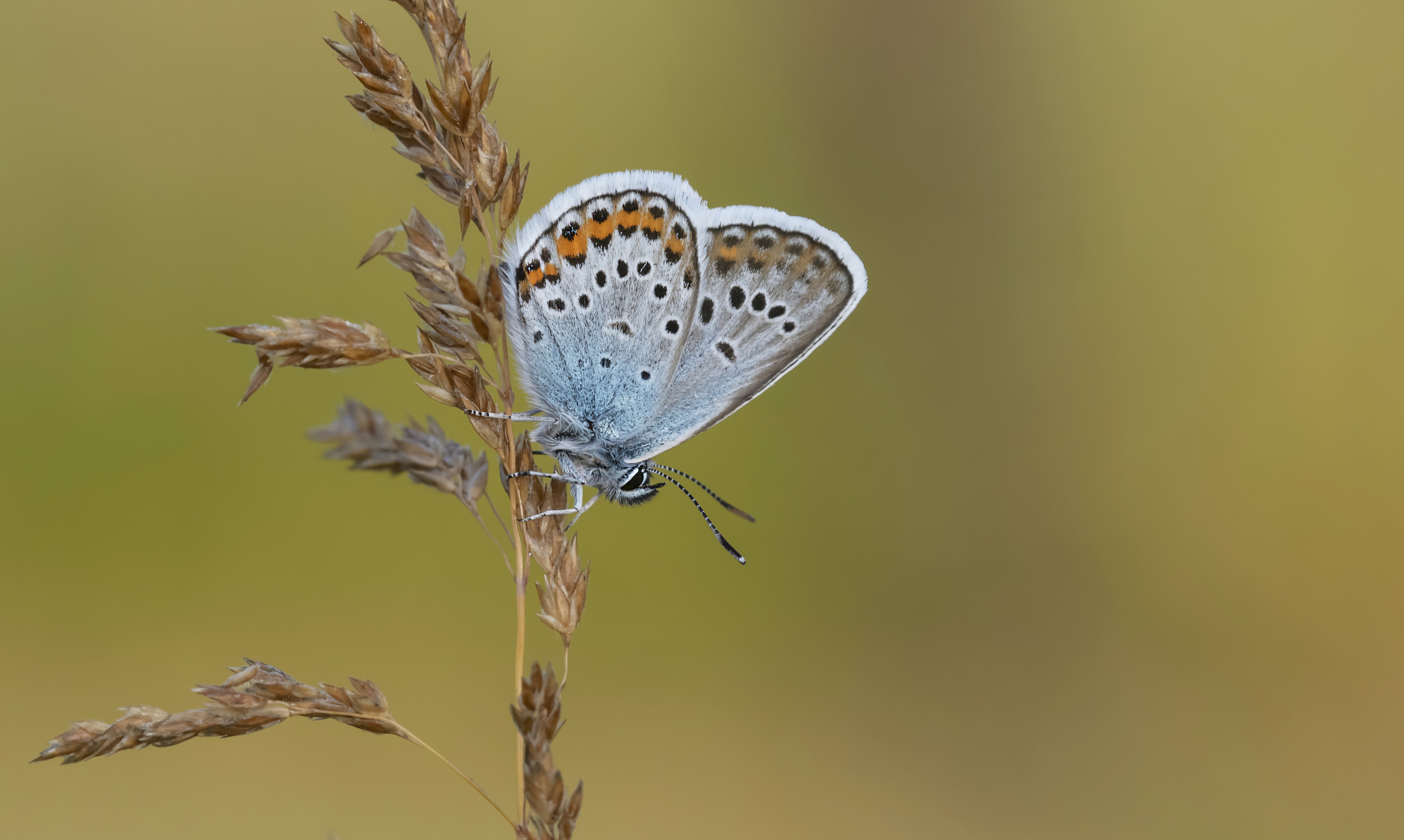
Silver-studded Blue waking up in the early morning glow.


The sun is up and the Silver-studded Blue opens up.


On the meadows just behind the house I could wander anywhere I wanted and it was great to explore and find some wonderful butterflies and other insects.


Black-veined White.


Sloe Hairstreak.


Oncocera semirubella


Pale Clouded Yellow.

It was a really good start to the trip, but much better was to come including 2 nights in the mountain area and a very productive meadow.


Sunday, 26 June 2022

Red-backed Shrike.

 I have recently returned from a fabulous trip to Transylvania with my son Chris and his girlfriend Anna. The main purpose of the trip was to meet Anna's parents and I was amazed at the super welcome and generosity of them and her sister.

I will be posting a few entries about this trip over the next few days as I was able to get out into the beautiful countryside there and see many insects and birds. A truly memorable trip and one I hope I may be able to do again in the future.

There were several special bird sightings but the one species that allowed me to get close enough for some decent images was the Red-backed Shrike, of which there were possibly 3 pairs in the vicinity of the house.


Male Red-backed Shrike.


Male Red-backed Shrike with a Cricket for tea.


Female Red-backed Shrike.


An unfortunate end for this Chafer that had been skewered onto the bush. The Shrike living up to it's reputation as the 'Butcher Bird'.


Such a fabulous looking bird.


Tuesday, 21 June 2022

Kent Butterflies, Orchids and Moths.

 With my good friend David going away to Bempton, the same time as I was going to Transylvania, he invited me over to Dinner before we went following a trip to Kent looking for Heath Fritillaries and Orchids. 

As the forecast seemed ideal, sunny intervals and light cloud all day, we headed off hoping the forecast would be right!!

As we approached the Heath Fritillary site all the clouds vanished and it became very sunny, not quite what we wanted but better than going the other way!! Of course when we entered the woodland the butterflies were waking up and were reluctant to show their beautiful under-wing patterns. However, at least they were there in pretty good numbers. After an hour of watching them and hoping for a bit of light cloud cover a couple of wardens turned up to survey Woodpeckers, so we decided to head further into the wood to see if we could find some more clearings where the butterflies would be. This worked in our favour as we soon found a couple of other quiet sites with plenty of Fritillaries. The cloud also started to build up so we stood a chance of the butterflies slowing down a little. With a lovely White-spotted Sable micro moth also flying in the clearing we had another great hour or two and some lovely images were achieved.


Some of my best ever images of the beautiful Heath Fritillary.


We then headed south for some of Kent's special orchids. The Monkey Orchid was first on the agenda, a difficult one to get in full flower as my butterfly visits to the county never seems to coincide with the best time for this species, either being too early with the Duke of Burgundy, or too late most years with the Heath Fritillary. Once again most of the Monkey Orchids were past their best, but a couple were just about okay still. The weather had now taken a turn though with heavy clouds and light rain on and off.


Monkey Orchid.

Following this we headed to a site for Late Spider Orchids. The problem now was opposite to the start of the day as it had now started to rain heavier along with a bit of a breeze. As we arrived at the site the rain had stopped fortunately and as I entered the meadow where the orchids are found I spotted what appeared to be a Small White butterfly flying. Looking closer though it turned out to be the very rare Black-veined Moth. This was the first of 5 of these moths seen during the visit. One of them was seen at roost when the rain started up again and a few photos were achieved of this fabulous moth following photographing some wet Late Spider Orchids.


Late Spider Orchid.


Female Black-veined Moth.

If we had known the weather was going to be like it turned out we would probably not have gone, but as it was it was a fabulous day finished off by a lovely meal from Jennie.