Followers

Saturday, 23 February 2019

The Brimstone Ride.

Since Christmas I have started a bit of a keep fit campaign getting back out on the bike. My marathon running days are unfortunately over, thanks to a bit of a problem with the old ticker 6 years ago, but riding at least keeps a bit of weight off and will hopefully get me fit enough to do some good long walks in the Summer.

Anyway, today I was out in the glorious sunshine on a ride in ideal weather for butterflies to be on the wing. To date this year I have just seen 3 Peacock, and despite a short search for Brimstone the other day the cool breeze kept the butterflies at bay.
It was on the steep climb today between Lullington and Wilmington when I spotted my first Brimstone of the year, this was joined in flight by a 2nd. Always a great sight of that gorgeous yellow, and it was not the end of it either, as just the other side of Chiddingly another 2 were seen that also included a female.

Obviously, as I was on the bike I was not in a position for photography so I have dug up a few older shots of the Brimstone from a few years ago.


Male Brimstone shortly after coming out of hibernation.


Saturday, 16 February 2019

Early Spring-time Kingfisher.

Due to several commitments with both myself and Phil I haven't managed to get out to his site this year, so when he rang on Tuesday inviting me over I had no hesitation in accepting the invite.

It turned out to be one of the best sessions we have had together with many visits from the female Kingfisher, and with the Hazel Catkins being out too there was a very good chance of some lovely Spring photos.

The pond the bird visits is free of fish as far as we are aware, so the bird has become a bit of an expert at catching Dragonfly larva instead and during our visit we saw her catch 8 of these, mainly Common Darter I believe, although one Emperor was also caught as well as one Damselfly larva.


Kingfisher with Common Darter larva.


Kingfisher juggling the larva ready for swallowing.


In the intervals when the Kingfisher vanished we still had plenty of action with the smaller common birds with a very nice selection.


Coal Tit.


Long-tailed Tit.


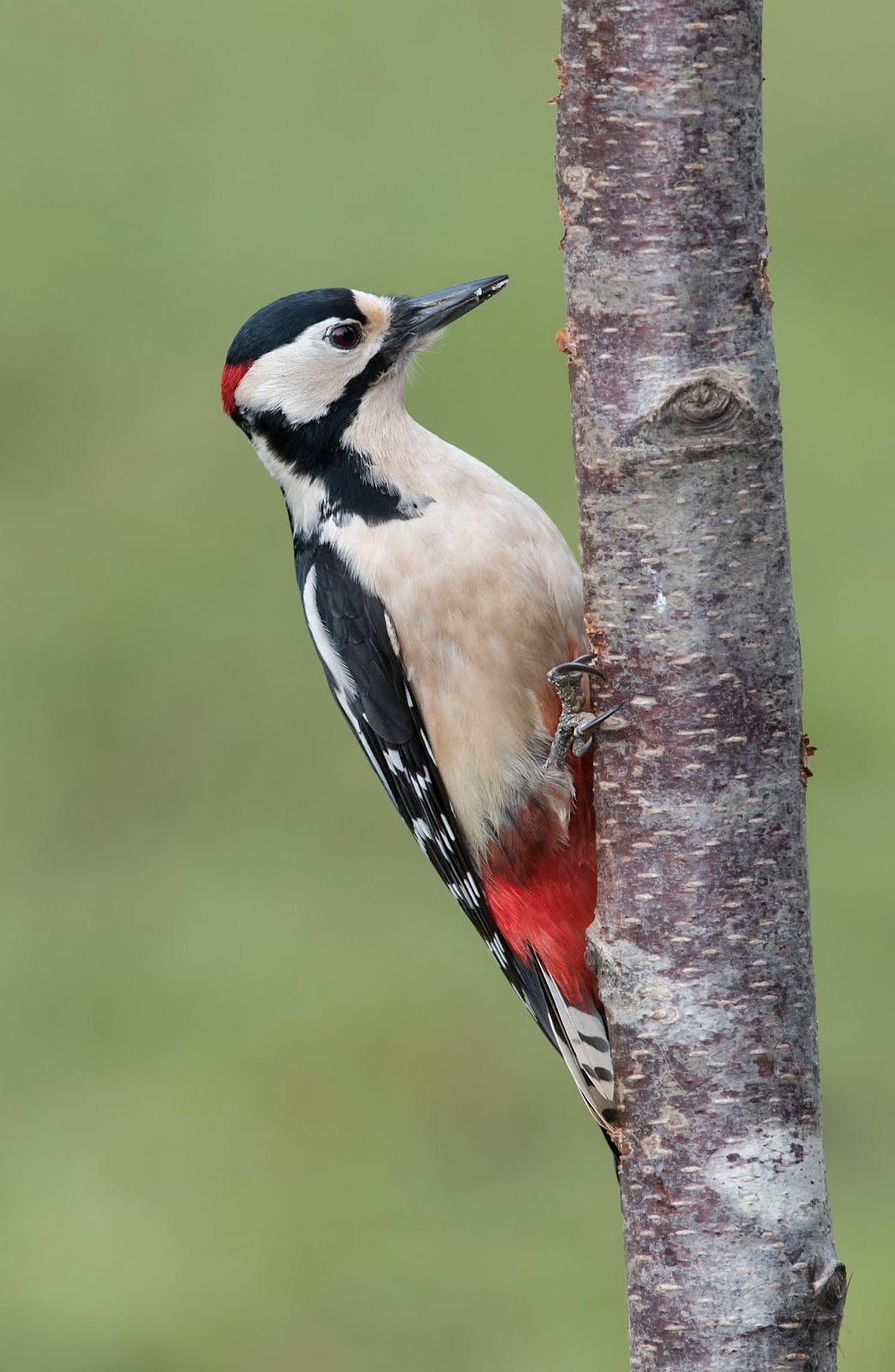
Male Great-spotted Woodpecker.


Blue Tit.


Robin.

We also had a stunning male Fox appear. I was very lucky to catch him without the Hazel tree in front of him. I took a quick shot as he walked through a gap. The noise of the shutter going off made him stop and look in our direction where I managed another 3 shots, one of them looking straight down the lens.


Male Fox in pristine condition.

As ever, my thanks to Phil for his invite and help in getting a set of photos that I'm rather pleased with!! His expertise and patience makes this possible.


Sunday, 3 February 2019

Kent Crossbills.

Winter time can be very good in the pine plantations for Crossbills as they fly around in noisy flocks before the nesting season gets going. A couple of years ago I missed a good opportunity in Ashdown Forest where they were being seen regularly and this Winter I was determined to try again. 
There then came news of some good sightings in a forest in Kent with birds regularly coming down to drink in puddles. On a sunny day a few weeks ago David and I headed over there with instructions of where to go. As it was we would soon have found the spot as there were several others with the same idea. Perhaps too many as the Crossbills didn't really perform as well as we had hoped.
I did actually improve on my best Crossbill shot, but it wasn't too difficult to do that as my previous best was a shot I took many years ago in Wales with a little compact camera held over the eyepiece of a spotting scope!!


Male Crossbill.


Our next attempt would then probably have been at Ashdown Forest, that was until I spotted some superb images from Kent by my birding friends, and proper bird photographers Steve Ashton and Tim Gutsell, with the birds coming down to a tree that had some accumulated water in the top of the trunk.
Even then it was a very late decision to go and try again, following a message from David when I had returned from collecting Matt from his India trip. I wasn't really feeling up to another day of standing in the freezing cold and seeing very little. 
Of course, we also had to find the tree that the birds were coming down to. Bearing in mind that there were several thousand trees in the forest, although reading between the lines it was thought the tree was near where we had been the previous time. However, confidence of success was quite low to say the least.
Walking to the original spot we checked out likely trees and thought we had narrowed it down to a handful. After around an hour David spotted 6 Crossbill in a tree back along the woodland ride so we quickly made our way to the tree where they were still sitting. Gradually they descended down the tree and then took it in turns to drink from the crevice where the water had obviously collected.
Unfortunately, the spot they were drinking from was in the shade and it wasn't easy getting any shots of any significance. After a drink the birds flew away and it was back to a bit of a waiting game.


My one shot from this encounter. Another male Crossbill.

By now we had been joined by a few more birders, although some came and went so it was never too busy. We were now back at the original spot, when suddenly a large flock flew over our heads and headed for the same tree. Once again we headed to the tree where between 20 and 30 birds were gathered. Once again they gradually descended to the drinking spot. By now though the sun had moved around a little which helped, as well as the birds having to wait their turn which made the photographic possibilities much greater and easier. Both male and female birds showed really well and made the trip very unexpectedly successful.


Male Crossbill slowly descending.


Female Crossbill.


Male Crossbill.


Mr and Mrs Crossbill.


Female Crossbill.


Male Crossbill.


Male Crossbill.


A small flock of distant Crossbill.


Tuesday, 22 January 2019

Snow Bunting On The Beach.

Although I have seen quite a few Snow Bunting over the years, it is one of those birds that I have struggled to get shots that I'm really pleased with.

With one of these delightful birds currently spending the Winter on the beach in West Sussex, and a sunny day it was thought a trip in that direction was worth doing.

Following a very clear night I was convinced we would arrive and find the bird had moved on, but as we were walking along the beach one of the many dog walkers told us that the bird had been seen some time earlier. A little further on, and after seeing a couple of other birders that were also looking and failing, I spotted a small bird fly away from a dog a couple of hundred metres further on. Binoculars confirmed the bird had been found. We then had a very enjoyable couple of hours watching and photographing this very confiding bird. It was amazing how many people out for a stroll didn't see the bird even though they were almost treading on it as they walked past. It was mainly dogs that the bird would fly up from as it fed on the main footpath.


Snow Bunting posing well.


A little preen.


It was certainly a messy eater.


Still messy on the beach.

Shortly before we left the bird had disappeared, but I then spotted it sitting on one of the groynes where I assume it was busy digesting its food.
Thinking I may be able to get a shot or two a little different from most of the others I slowly moved into position. With such a confiding bird she allowed me to get several shots as she preened some more before the perfect pose.


Having a preen on the groyne.


And a good stretch. (Hope it doesn't get a groyne strain)!!!!


Snow Bunting looking very pretty.

We then headed for a session with the Short-eared Owls. Once again we failed with the photography, but we did get some good views of several Shorties as well as the Barn Owl.


Short-eared Owl just after the light had gone.


Thursday, 10 January 2019

Black Redstart take 2. If at first _ _ _ _

A repeat of last Thursday, with even the weather forecast being the same. However, this week the forecast was pretty much right with sunshine most of the time.

The Black Redstart was nowhere to be seen when we first arrived, although thankfully after a few minutes it was showing well, and with a patient wait it was soon performing very well for us on and off. We even had it in sunshine and a few minutes later in softer lighting as the sun went behind clouds. The cloudier pictures were much easier to get the colour balance right in processing. A fabulous morning followed by another trip to the Short-eared Owls. These unfortunately did not perform at all well with only 2 distant birds seen. Even the large flocks of Yellowhammer had all but gone.


Male Black Redstart.


Meadow Pipit.


Friday, 4 January 2019

Black Redstart and Blast from the past.

With a sunny day forecast yesterday David and I decided to head for Shoreham where a very smart male Black Redstart had decided to take up residence for the time being. When David arrived at my place the cloud cover was looking a bit heavy, but as that had happened a few times recently we assumed it would clear soon. However, when we arrived on site the clouds were just as bad and it looked as though we were not going to get lucky.
The good news was that the bird was at least showing, although it was quite flighty. Eventually a patient wait brought it within range and a few shots were taken, albeit not as good as we were hoping with the very dull conditions.


Male Black Redstart.


When it became clear that the weather was not going to improve we headed for a nearby site that can be very good for Short-eared Owls. This is one of my favourite Winter sightings and I'm pretty sure I didn't see any of these Owls last year so I was hoping to at least see some. We didn't have to wait long either as one was flying on arrival. A little later we saw at least 3 of them, although the camera stayed quiet. On leaving a lovely Barn Owl was hunting over the meadows but by then the light had really started to go. What was particularly impressive was the high numbers of Yellowhammers. Each field seemed to have large numbers and we may well have seen around 100 of these Buntings during the time we were there. I did take one photo of a flock in a bush, although this is only a small flock compared with some of the others. Several Reed Bunting were also mixed in with the Yellowhammers.


Yellowhammers in a bush.

This morning I had an e mail from Pete saying he had found an old picture of me and my good friend Larry Crowhurst taken many years ago. I would guess that the picture was taken around 1979 or 1980 and was probably in the Chiddingfold Forest where we regularly used to go butterfly hunting in those days. Larry and I used to have some great sessions in those days photographing Pearl-bordered Fritillaries and Wood White. Both common species in that area in those heady days. Unfortunately Larry passed away in October 2002 and is still missed by his many friends. My thanks to Pete for e mailing the picture over.


Larry Crowhurst and myself. I am the handsome bloke on the right, Larry is the intelligent one on the left!!


Tuesday, 1 January 2019

2019 Kicks Off in Style.

Happy New Year everyone.

Having seeing my last butterfly at the end of November it was a pleasant and pleasing start to 2019 seeing a Peacock at the first opportunity. I was sitting at home working through some photos when I noticed that the sun had come out. I quickly got a bit of gear together and headed up to High and Over to have a quick look for Wall Brown larva. Before I had a chance though to look for larva a worn Peacock was suddenly flying around me. I managed a shot of it before it flew away, although not far, as it was still flying when I left the site an hour later.
There was also a Bumble Bee flying around.


Peacock on 1st January.


It was then onto the larva hunt. One I found quickly, but I then struggled to find any more until I tried a different area. Here 4 were found including one that looked as though it was either approaching a moult, or had just moulted. This one was both marked slightly differently, but also had an over-sized head. All the larva were busy feeding in the mild conditions, it was also good to photograph a couple of them showing their feeding pattern on the grass.


The first Wall Brown larva of 2019.


Wall Brown larva probably approaching a moult. Feeding signs above and below the larva.