Followers

Wednesday, 29 August 2018

Lady Adonis.

It has been difficult in the past few weeks to get out into the countryside, so it was quite a relief over the past few days to get 2 decent strolls in. Even then, the weather was not particularly helpful on the first walk.

However, it was good to see many Adonis Blues on the patch. The 2nd brood has been pretty good locally. Most of the males are now looking as though they have been out a while, but there were plenty of females showing, with several nectaring or resting on the numerous Devil's-bit Scabious and others busy egg laying in the short turf.


Roosting Female Adonis Blue.


Female Adonis Blue on Devil's-bit Scabious.

I have heard several reports of high numbers of Autumn Ladies Tresses on the downs. However, my small colonies on the patch are very poor at the moment with only 3 single plants in 3 areas. It is still early though, so I am hoping more will show in the near future. Of the 3 seen, one was still not fully out, whilst the other 2 were quite different with one very impressive plant having the flowers circling around the stem, and the other one all the flower was one side of the stem. These are the final orchids to flower each year, really sad to think another season is already coming to a close.


Autumn Ladies Tresses.


Autumn Ladies Tresses.

I am expecting the final brood of Wall Brown to start this week. Yesterday all I saw were a couple of very tatty 2nd brood which were just hanging on. There were very large numbers of Small Heath with some areas having double figures all flying together. Some old Chalk-hill Blues were also just hanging on, but a Small Copper seen on the Scabious was extremely fresh with its wings still partly folded up. Let's hope for a good 3rd brood of these lovely little gems.

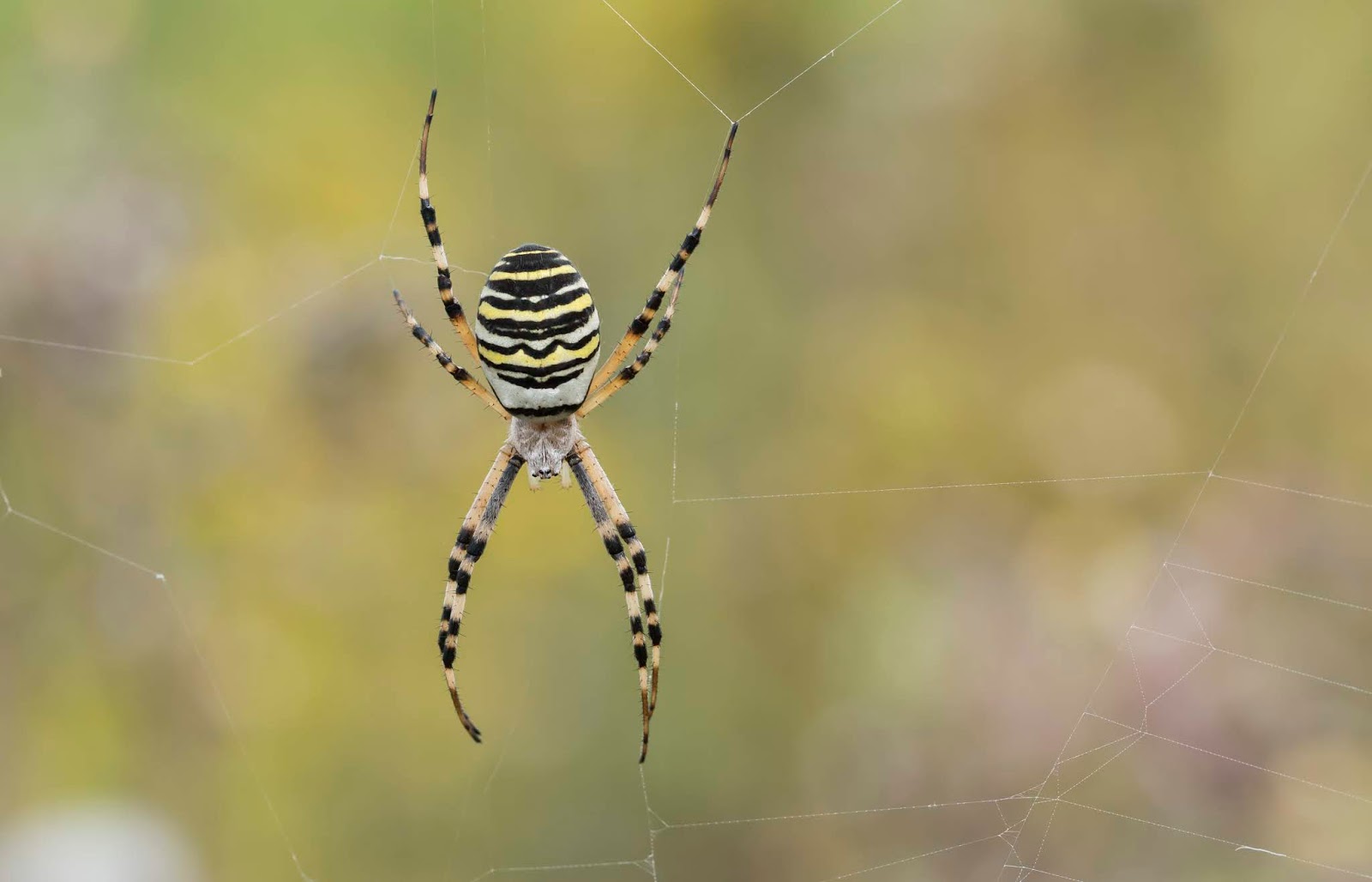
Several Wasp Spiders were also still showing well, and some of the females are now very large.


Sunday, 19 August 2018

Anyone For Cricket.

With the weather taking a turn for the worse lately, it was a case of trying to work out what to go and look for.

Following my last hunt for the Southern Emerald Damselfly ending in failure I had assumed that the damselfly had moved on. Then earlier this week Nigel saw either that one, or another male, so on Friday we both met up to see if we could have another go at this rare beauty. 
After much hunting in perfect conditions all we had for our efforts was a Small Red-eyed Damselfly, which kept too far out in the pool, and a rather nice female Great Green Bush-cricket.


Female Great Green Bush-cricket.

The only other time during the week when I had any camera action was a walk along the local patch where the Adonis Blues are suddenly doing well. Although the conditions did not bear well for photography, one female posed reasonably well. I also found a larger Buff-tip larva than those I found a couple of weeks ago.


Female Adonis Blue.


Buff-tip larva.


Saturday, 11 August 2018

Wasp Spiders.

I can still remember the very first time I saw a Wasp Spider. It was around 25 years ago at the top of Charleston Bottom on the edge of Friston Forest when Pen and I had taken our 2 young lads for a walk there. I then saw them occasionally over following years, although most years I failed in my searches for them.

However, as the years went on it has become clear that Wasp Spiders were becoming gradually more common. Now though, over the past 4 years, they have become very much more numerous locally. Last year I saw well over 100 of these wonderful creatures. Today was only my 2nd of the year, but in a small area there were large numbers of them. It was actually quite difficult photographing one without disturbing others and their webs nearby.

As the Autumn approaches many more of them will be seen!!
The main prey of these spiders is Grasshoppers, although one today had a Small White and a Common Blue in its web.


Wasp Spider (Argiope bruennichi).

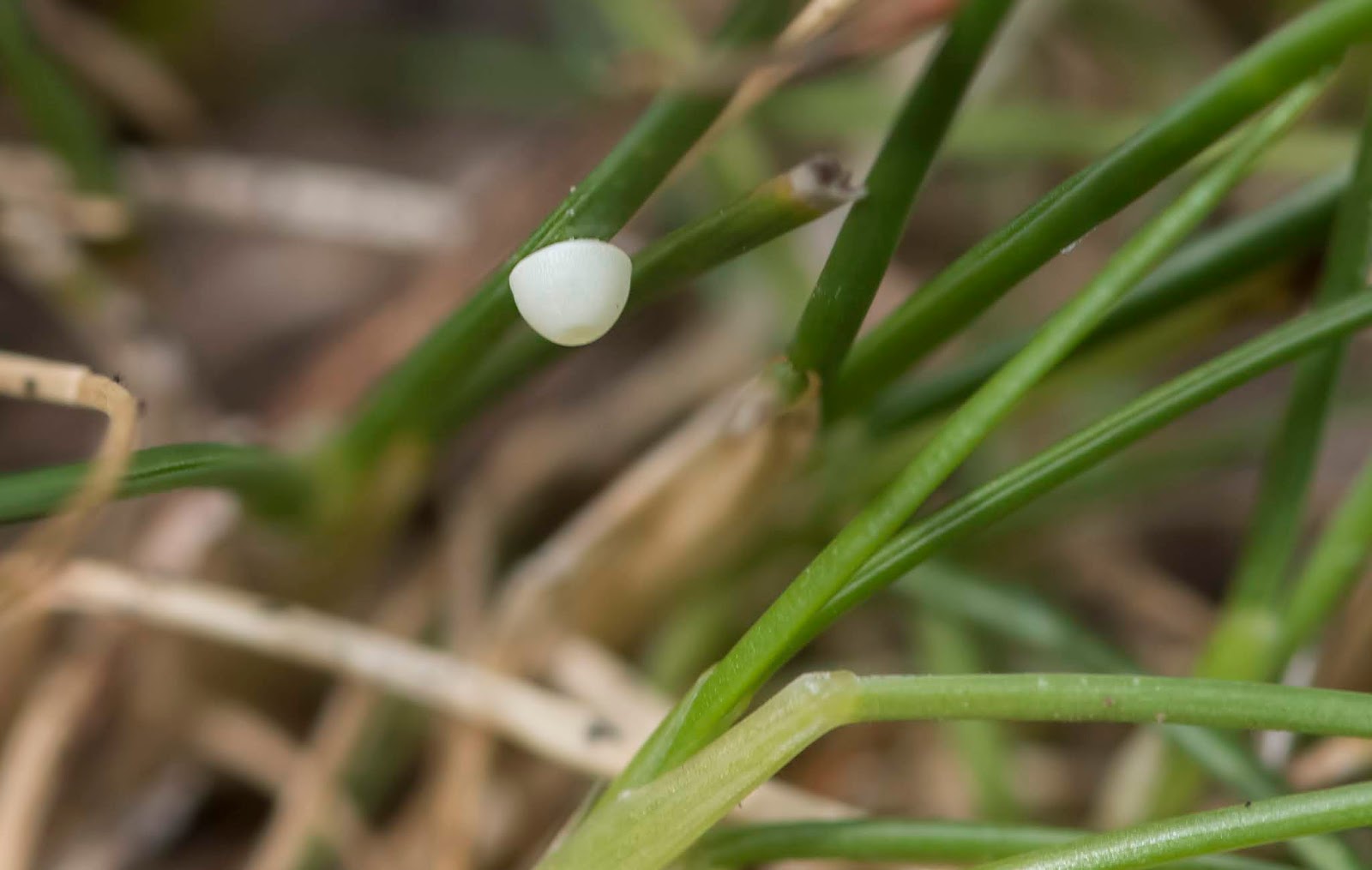
Before seeing the spiders I had seen large numbers of Silver-spotted Skippers on the Downland slopes. Many were females looking to lay eggs on the Sheep Fescue grass. Surprisingly, I had never seen the egg of this species before, so when I spotted a female that appeared to be egg laying I watched very closely, seeing the egg pop out from the end of the abdomen. Then looking through the camera with the macro lens on closest focus I spotted another 4 eggs in very close proximity to the one just laid. These were not as white as the freshly laid one so had been there for longer. For such a small butterfly the eggs were surprisingly large.


Silver-spotted Skipper Egg.

On the subject of butterfly eggs, last week I was on the local patch when I saw a female Wall Brown go into a scrape, obviously looking to lay. When she flew off I had a good look on all the small roots expecting to see an egg. However, I was very surprised to find 2 eggs next to each other that the butterfly had laid on a Thistle seed-head.


Wall Brown eggs on Thistle Seed-head.


Wednesday, 8 August 2018

Southern Emerald Damselfly.

On Sunday I was halfway through the weekly shop at Sainsburys when I had a text from Matt telling me there was a Southern Emerald Damselfly in a localish dew pond. 

I decided not to do what Matt had done when a rare bird had turned up when he was in a similar situation, abandoning the half full trolley in the middle of the shop and running out!! Instead I carried on and decided that as I was in the area the following day I would wait and hope it was still there.

So, on Monday I was to do my Wider Butterfly Survey, and this finished at the exact spot where I was hoping to see the damselfly. 
As it was, it was the first thing I saw when I arrived at the dewpond. I managed to get some good views through the binoculars, but I decided I would need the longer lens on, so I changed lenses, and then the damselfly vanished. Of course, being such a rare insect I was keen to get at least a record shot so I kept on searching hoping it would re-appear.

After around 30 minutes it was suddenly there in front of me again. From then on it performed well for me until I decided to call it a day. By then I had managed several shots with both the telephoto and the macro lens. Being an Emerald Damselfly it typically held the wings out when settled, which makes it impossible to get the wings sharp. However, the diagnostic dark and light wing-spots were very obvious.

Well done to the person that originally found the damselfly on the Saturday. This is an extremely rare migrant damselfly and could well be the first Sussex record. Several have been found in Kent in recent years and apparently a few have also been seen in Hertfordshire, as with several migrant species of Dragonfly and Damselfly this is another that will probably soon be colonising this Country.


Southern Emerald Damselfly showing the two tone wing-spots.


Male Southern Emerald Damselfly.


Today, I decided to go and have another look for the damselfly, as the weather was a bit cooler and with some cloud about the lighting would be a little different. However, with a cool strong breeze blowing and heavier cloud while I was at the dewpond there was no sign of it. 

On the way though I had a good hunt for Hawk Moth caterpillars. Generally this is a frustrating pastime and as usual I did struggle with just a few Looper larva spotted. I then came across a small group of Buff-tip larva which gave me a photo opportunity.


Buff-tip larva on Sallow.


On the return to where I had parked the car I had another search and eventually I found a half grown Poplar Hawk-moth larva.


Poplar Hawk-moth larva.


Tuesday, 31 July 2018

Chalk-hill Blue Meets Lucy Linnet.

Not long after returning from Bulgaria I went in search on the local patch to see how numbers of Chalk-hill Blues were doing. Having photographed many open winged males over the year I was quite keen to get some pictures of females. The problem with all this hot weather though, is that very few butterflies pose well in the heat, and even early mornings can be unproductive as the butterflies are already warm before the sun hits them, so instead of opening their wings wide, it is just a quick flash before taking to the wing.
On one late afternoon I thought I would try to find a female going to roost with the plan of seeing if I could get her the following morning. I had just spotted a fresh female and was following it in flight when I suddenly had a female Linnet flying around my head. Assuming it had been flying up the hill and it hadn't seen me as I was crouched down by the butterfly I was a little surprised but assumed it would see me and fly off. However, things started to get very bizarre as the bird tried to land on my camera and then my hand. Me being me, I put out my hand and it promptly flew on it and started pecking my palm gently. I then got it hop onto a bush that was nearby and managed a few photos, but it was very persistent at trying to get back on the hand. This went on for around 20 minutes!!


Female Linnet.


Following this bit of fun I went back to looking for roosting female Chalk-hill Blues. Once again I was distracted, this time by an aberrant form of a male Chalk-hill Blue. It was a very difficult butterfly to photograph, despite it being at roost, as there was a strong breeze blowing. However, eventually a couple of decent shots were managed.


Aberrant male Chalk-hill Blue. (missing many of the under-wing spots).


Several days later I decided to try an early morning session, once again the female Chalk-hill Blues were the target. I found an area where several Chalk-hill Blues were roosting including a couple of females. However, all of a sudden I had a bird flying around my head. It even woke one of the male Chalk-hill Blues up which flew off in a panic. Yes, despite it being only just getting light I had been found again by the female Linnet. There then followed a totally crazy couple of hours when I was trying to photograph the butterflies and at the same time having a Linnet trying to land on me. I have never had such a ridiculous session before!!
Almost as strange was a male Linnet that appeared to be her mate that was watching from around 20 feet away most of the time. She did fly off with this male a few times, but after a few minutes she would return, land at the top of a bush, call a couple of times and then fly towards me to land on my hand. I'm not quite sure how I managed to photograph the butterflies, but a few shots were managed.


Female Chalk-hill Blue


Female Chalk-hill Blue under-side.


Male Chalk-hill Blue.


Male Common Blue.


Of course though, this session will always be remembered by the encounter with the female Linnet. Eventually when I decided it was time to go home I had to walk up a very steep hill before going through a track back to the car park. Halfway up the hill I stopped to admire the view and the Linnet landed in the bush next to me and chirped at me before landing on my hand. Then again at the top she once again landed on me before flying away to another higher bush where she watched me go.

Whether she had been hand reared as a youngster I can't be sure. I never thought I would be photographing a wild Linnet though with just my macro lens.


Lucy Linnet!!


Sunday, 29 July 2018

The Stilt Family.

Several years ago I worked for a company based in North Norfolk. Most months I would have to go up there for sales meetings, and occasionally I would have time to call in at Titchwell for a little bird watching. In those days Titchwell had the only UK resident Black-winged Stilt. It was always a delight to see this beautiful wader, knowing it was an extremely rare bird in the UK. Since then I have only seen another 2 or 3 in the UK.

In recent years more of these birds have appeared for short periods in the UK and for the past 5 years there has been the odd pair breeding as well. 

With a pair of these birds, that probably had bred nearby, as they also had 2 youngsters in tow, appearing at Oare Marshes in Kent, David and I made a very late decision to head over that way and see if we could get a few photos of them. Calling into a couple of other spots on the way with mixed results, a Pectoral Sandpiper showing distantly at Pegwell Bay was the best, we rolled up at Oare early afternoon to be told that one of the Stilts had just walked along the shallows nearby and we should have been there 10 minutes earlier!!

From a distance we could see one of the adults and a youngster over the other side of the large expanse of water and we hoped that they would eventually come close again. While we were waiting we had good views of moulting Ruff and Avocet as well as large numbers of Black-tailed Godwit, as well as a small flock of Whimbrel flying over.

Eventually one of the youngsters flew in shortly followed by the female. With more waiting they did get reasonably close to us.


Female Black-winged Stilt.


Young Black-winged Stilt.


Muddy Waters!!


In the distance we could still see another adult, this one being the well marked male. This is the one we really wanted to come close. After another wait the 2nd chick appeared shortly followed by the male. Unfortunately the male still kept a little too distant, but with the wind easing off we both managed to get a few pleasing shots with some nice reflections.


Female Black-winged Stilt.


Male Black-winged Stilt.


Avocet. 


Ruff.


Tuesday, 24 July 2018

Bulgaria Finale.

My final post starts off again on that same rutted woodland track. We had seen so many species here the day before that a 2nd visit was a must. 

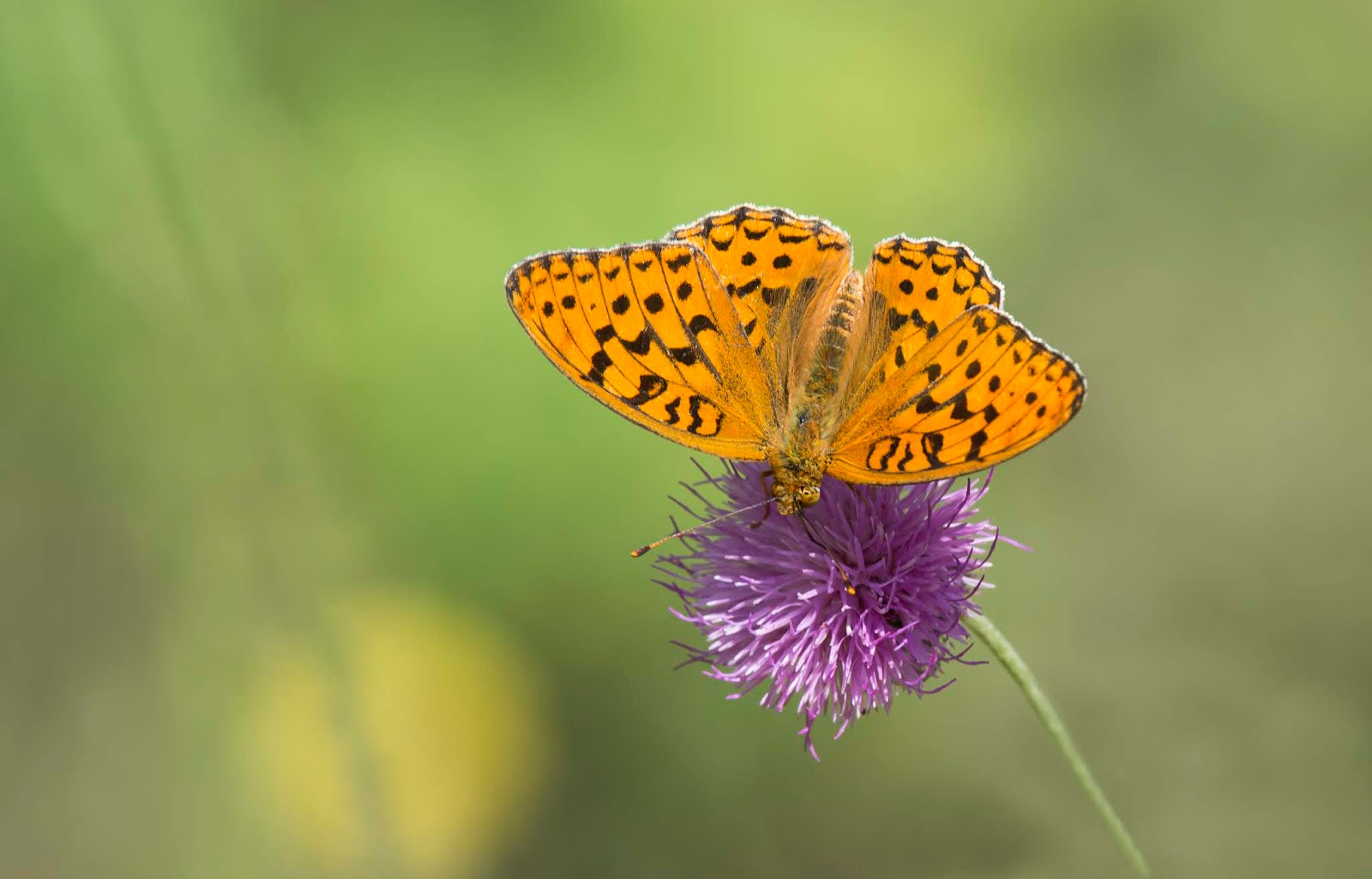
In an area where we could pull into the side of the track easily, we could see some thistles well in flower and a large Fritillary on them. Straight away we could see it was a Cardinal, the largest European Fritillary. This was the only one of these we saw on the trip, but it was a fine specimen and it remained faithful to these thistles for some time.


Cardinal on Thistles.


It was whilst I was photographing this beauty that we suddenly had a very large, dark butterfly flapping around us. I immediately thought we had an aberrant Purple Emperor as it was behaving in a very similar fashion. It even landed on the car, and then went into the car where it briefly sat on the back seat next to the Butterfly Book!!
After it had eventually landed on the track we could see it wasn't a Purple Emperor, but a wonderful Poplar Admiral. There is no doubt that this would have been our favourite butterfly if only it had hung around and let us get some photos of it. As it was I managed to get a grab shot of it as it sat on a fallen small branch. However, it was soon very quickly back in the canopy where we lost it.


Poplar Admiral.

On another roadside verge we found many more flowering thistles that had several High Brown Fritillaries on them. This was the most common of the larger Fritillaries. Some of these were also in very good condition. At least 4 High Brown Fritillaries were of the form cleodoxa which have very few markings on the under hind-wing. The first of these I saw I was convinced I had found a different species.


High Brown Fritillary.

Queen of Spain Fritillaries were also seen in most areas throughout the week and varied from very tatty specimens to very fresh, showing that they have an almost continuous flight season.


Queen of Spain Fritillary.

On our final day we headed away from the area and ended up doing more birding. In the area where the Golden Orioles were prolific I managed to photograph our 2nd Scarce Swallowtail of the trip while Matt was trying to nail the id on the Syrian Woodpecker.


Scarce Swallowtail.

Eventually we left this meadow and drove further up the hillside where we spotted a farm track that looked worthy of checking out. It was here we saw Great Banded Grayling and as the light started to drop, our only Lattice Brown. The Brown landed on a tree branch quite high up and the only way we could get decent shots was with a small fill in flash and Matt pulling the branch down to my level, and for those that know me, that is quite a long way down!!


Great Banded Grayling.


Lattice Brown.

On the trip we also saw a few stunning moths of which my favourite by far was the beautiful Purple-barred Yellow. This species we saw several times including once at very high altitude.


Purple-barred Yellow.

A Hummingbird Hawk-moth was seen nectaring alongside the High Brown Fritillaries.


Hummingbird Hawk-moth.

The following moth I was having trouble working out what it is. David Gardiner spotted the similar fore-wing wing pattern to the Purple-barred Yellow above. It looks as though it is either the same species, with an abnormal colouration, or a very closely related species.


Unknown moth in the Lythia family.

It was certainly a week to remember and has given me the taste for more foreign butterfly trips, this being only the 2nd one I have done. Thanks to Matt for doing all the driving as well as spending time trying to id the species. Also for showing me many new bird species to me. Thanks also to Steve and Julie for the use of their apartment, as well as Jean, Chris and several of Pen's friends for helping out back in England while I was away, as I couldn't have gone without that help.