Followers

Thursday, 6 July 2017

The Purple Patch Continues.

It certainly has been a good few weeks hunting down butterfly species I have struggled with in the past. Following on from the excellent days with the Purple Emperor, it was on to the more difficult Purple Hairstreak. Ever since I first got interested in wildlife, nearly 50 years ago I've wanted to get some good sightings, and then photos of this species. Despite it being very common in Oak woodlands they are notorious for not performing for the camera as they spend nearly all their time in the canopy. Nigel and I have for several years tried different techniques of studying them with mixed success, basically I failed, Nigel succeeded!! His success, with one of the best shots of a female Purple Hairstreak I've seen came when I was meant to be meeting him, but I got delayed at work. After I arrived having missed the moment, he had great pleasure in showing me and talking about the event for a very long time!! We both found areas in woods that showed promise and last year I thought things were looking up when we both had several close encounters. My first attempt this year was too early in the flight season and I didn't get another chance until Nigel had started to really hit the jackpot at the same spot. I then had several mornings where I too, at long last started to get lucky. Both male and female Purple Hairstreaks gave themselves up for the camera with both closed and open wing shots possible. 


Purple Hairstreak under-wing.


Female Purple Hairstreak. This one had been flushed from the Oak by a Willow Warbler!!


Male Purple Hairstreak.


Female Purple Hairstreak.


Male Purple Hairstreak.


Female Purple Hairstreak.


Tuesday, 4 July 2017

A Southern Hawker Emerges.

A stroll around Ashdown Forest with Nigel produced 4 different Southern Hawkers seen emerging from their excuvia. The first one was the only one in the open enough to get some shots of, albeit in the middle of a small pool so I could only get shots by using the telephoto, unless I was going in up to my waist!! There was just 11 minutes between the first and last shots in this sequence, so it all happened pretty quickly and we were lucky to be in the right place at the right time. All the others were more advanced in their emergence than this.


Southern Hawker emerging as we first found it.


Wings starting to expand.


Just 11 minutes later and the wings have expanded.

With Ashdown being quite high up the Black Darters are not yet showing, the Small Red Damselfly however are now flying around the acid pools.


Small Red Damselfly.


Sunday, 2 July 2017

Silver and Gold.

For the past couple of weeks I've been walking the local woods with the main quarry being a smaller 'Purple' quarry. More of that in a future post. Whilst this hunt has been on though I've had some great sightings of the Silver-washed Fritillary and a few other woodland gems. These glorious butterflies get their name from the hint of silver on the under-wing, although the golden orange colour is what stands out as they fly at breakneck speed through the woodland glades and canopies.  Most of the males are now starting to show a little wear and tear, but some of the females are still looking fresh.


Female Silver-washed Fritillary.


Male Silver-washed Fritillary.


Male Silver-washed Fritillary on Thistle.


Male Silver-washed Fritillary on Bramble.


Mating Silver-washed Fritillaries.


Female Silver-washed Fritillary.

I was also in for a rare treat when I saw my first ever Valezina form of this species. This is a form that isn't often seen this far East and is only ever the female butterfly.  As soon as I saw it fly past it was pretty obvious what it was. Although it flew deep into the woods, not long after the first sighting it re-appeared and sat still for some shots.


My first ever view of the Silver-washed Fritillary Valezina form.


Silver-washed Fritillary, Valezina form.

Gatekeepers are now building up in numbers and Ringlet are extremely numerous in the woods with some taking off with nearly every step of the way.


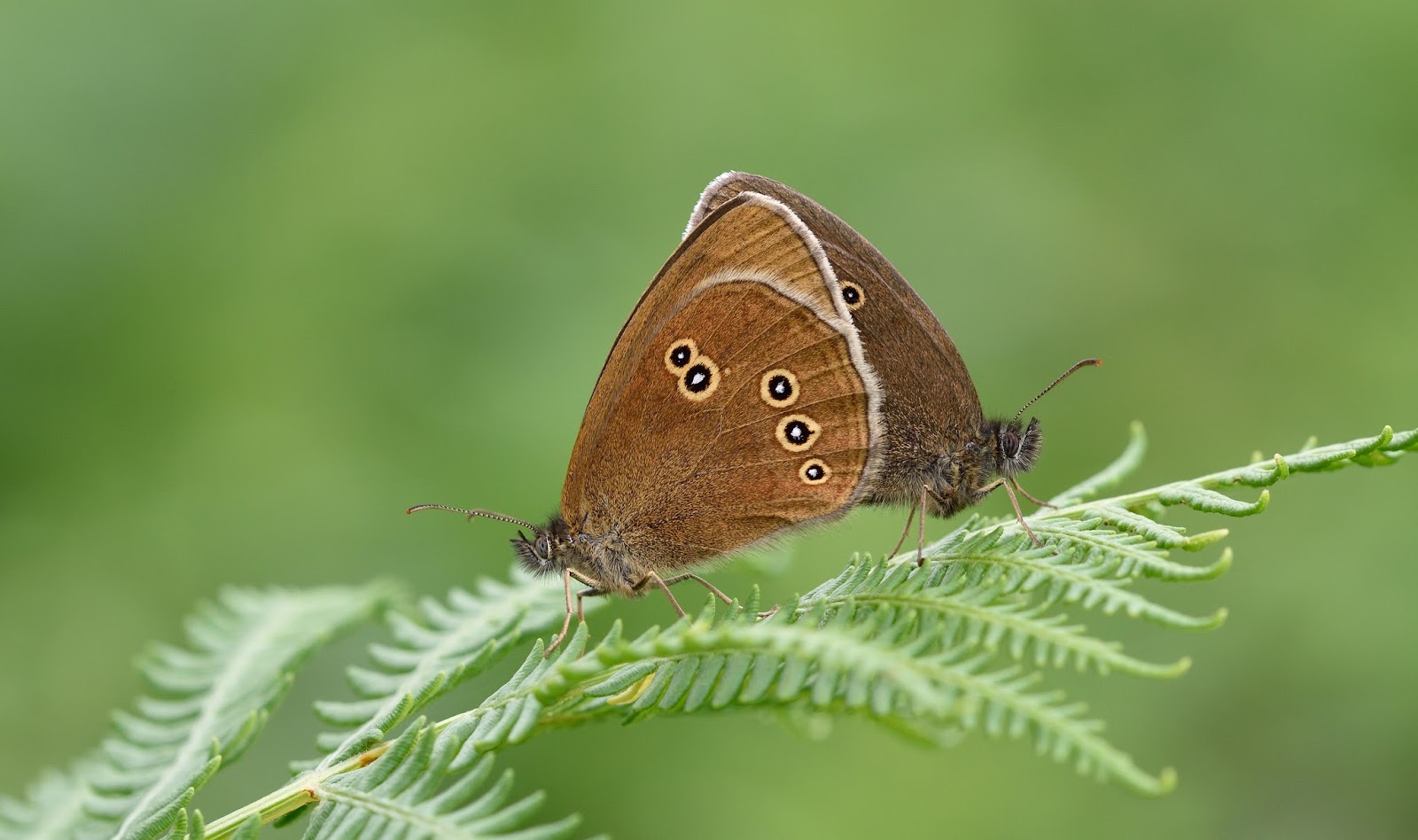
Mating Ringlet.


Thursday, 29 June 2017

Purple Empress Impresses!!

My 2nd trip looking for Purple Emperors was one of those days that will be remembered for an awfully long time. I once again met up with Mark Colvin and we were also this time joined by Nigel Kemp. With 3 of us we spread ourselves out a little so we could check a larger area. I was enjoying watching some White Admirals and Silver-washed Fritillaries when Mark called to say he had watched an Emperor land in a Hazel tree. With the binoculars I thought I had seen a hint of Purple, but I must have imagined it as this was a stunning, newly emerged female. She performed beautifully in the tree, albeit a little high, although I could get some nice images with the telephoto lens.


Female Purple Emperor in Hazel.


After a few minutes she took off and we thought that was the end of watching her. However, we followed her along the track and couldn't believe it when she landed on the ground. This was our 2nd grounded female in 2 visits which is almost unheard of. Here we could see she was in even better condition than the one we had on the previous trip.


Female Purple Emperor.


All 3 of us managed several shots before she took off again and this time she landed in a Hazel tree at more or less head height. After we all once again got some quick shots Mark pulled the branch down in the hope she would stay there and the angle would improve. Amazingly, she did stay put. I then took over from Mark and pulled it down yet further when the angle became perfect. Fortunately I was still able to take one handed photos with both Mark and Nigel firing away just above my head. One of the best butterfly experiences we have all ever had. Eventually she did take off and was lost to view. What a fabulous looking girl she was!!


Female Purple Emperor in Hazel.


This was still early in the day so we carried on walking the tracks in the hope of seeing more. We did see several grounded males feeding again on horse droppings as well as plenty of White Admirals and Fritillaries. We then saw another large Purple Emperor fly past and this too landed low in a bush, although the lighting wasn't brilliant. After taking flight again, we had seen that this too was a female, she dropped down to the edge of a very narrow stream where she picked up moisture. This meant 3 different female Emperors had grounded for us, and all were in great condition. A totally amazing 2 days spent in great company and with a lot of luck. Thanks again to Mark for the help in getting these shots.


Female Purple Emperor taking on moisture.


Tuesday, 27 June 2017

Purple Emperor Magic.

Most years I make a single visit to Surrey for the spectacular Purple Emperor, a very special butterfly that every enthusiast wants to see. This year I was keen to get an early fresh butterfly to photograph, and hopefully catch the moment when the light catches it right to make the wings become blue. I was very lucky this year to have an invite from Mark Colvin, and to be able to take advantage of his local knowledge of the area, including phoning me as soon as they had started to emerge. In the end I made the trip 3 times to try to get what I was after. Unfortunately I failed to get the complete blue male, but instead, succeeded in getting a much rarer sight and several photographs of the females. A few years ago Mark had taken the best photo I had seen of the female so it was quite strange that he was there to help me get such a prize for myself. 
Starting at just after 7am to avoid the 34 degrees heatwave it wasn't that long before we started to get some action with the first butterfly on the ground being the first superb female of the 3 days.


Female Purple Emperor.

After seeing this beauty fly up into a Birch we watched her for several minutes before she vanished. A little further along the track a male Purple Emperor was seen getting nutrients from some Horse dung. During the first 2 days we saw  males in this spot several times. After feeding they would occasionally rest up low in the foliage.


Male Purple Emperor.


Male Purple Emperor low in the trees.


Another male feeding.


Female Purple Emperor.

By lunchtime the heat of the day was too much for both of us and the butterflies, but a couple of days later the excitement increased!!!


Sunday, 25 June 2017

A Downland Breeze.

With Pen out for the day I had the chance of getting out without feeling guilty. The only problem was the weather, with cloud and a steady breeze which made me wonder if I should just chill out at home. However, with the weather looking poor for most of the coming week I decided to walk the local patch and see if I could find anything of interest. As it turned out it was quite a good walk after all with my first Dark Green Fritillaries of the year as well as my first Gatekeeper as well just before arriving back home bringing my years tally to 40. I also found a newly emerged Marbled White amongst many of these delightful butterflies, which gave me a bit of camera action. 


Dark Green Fritillary.


2 Dark Green Fritillaries keeping warm.


Newly emerged Marbled White.


Male Marbled White.


Male Marbled White.


Pyramidal Orchid.


Immature Black-tailed Skimmer.
(Deformed back wing).

Thursday, 22 June 2017

Woodland Wonders.

Over the past few days I've spent a bit of time in woodland in both East and West Sussex as this is the time of year when they come alive with wildlife. With these extremely hot days it also gives shade that some other sites do not give. The Silver-washed Fritillaries arrived earlier this year than expected and have graced the woodland in pretty good numbers as well as the White Admirals gliding through the trees. Some surprises have been a couple of Common Toads in the slightly damper parts of the woods as well as some Beautiful Demoiselles. A great time of year to be out in the woods.


Male Silver-washed Fritillary.


Male Silver-washed Fritillary.


Male Beautiful Demoiselle.


Male Ringlet.


Peacock larva.


Purple Hairstreak.


Common Toad.


Common Toad.